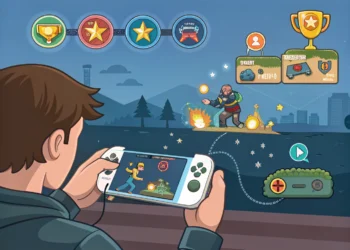
Feeling behind is one of the quickest ways a fun mobile game becomes stressful. You start a game a few weeks after launch, see players with stronger teams, limited costumes, rare characters, and event badges, and suddenly your fresh account feels late. Beginners should know this feeling is common—and often misleading.
Mobile games are built to show progress everywhere. That makes advanced accounts visible. It does not mean you are playing wrong. It means other people started earlier, spent more time, spent money, or focused on different goals. Your account only needs to support the way you want to play.
Separate personal progress from public comparison
Rankings, friend lists, guild boards, and social posts can be motivating for competitive players. For casual players, they can create unnecessary pressure. If you are new, compare your account to yesterday’s account, not to someone who has played for months. Did you unlock a chapter? Clear a level? Understand a system better? Find a character you like? That is progress.
Story-based and casual games are especially easy to enjoy at your own pace. A chapter does not become less interesting because another player finished it first. A character route does not lose emotional value because someone else has a rare outfit. The content matters when you experience it.
Do not chase every missed reward
Limited events and past rewards can make beginners feel permanently behind. But most games continue offering new rewards because they need new players to stay. Missing an old event is normal. Focus on current beginner missions, permanent content, and resources that help your immediate progress. Trying to compensate for everything you missed is exhausting.
If a game makes new players feel hopeless without old limited items, that is a design problem, not your failure. Beginner-friendly games provide catch-up paths, reruns, alternative rewards, or content that does not depend entirely on past events.
Spending money to catch up is tempting but risky. If you spend before understanding the game, you may buy speed without buying enjoyment. Catching up only matters if the destination is something you truly want. For many casual players, slower progress is not a problem; it is what keeps the game relaxed.
- Hide rankings if they make the game less fun.
- Focus on permanent missions before limited extras.
- Set one short-term goal, such as unlocking a chapter or improving a favorite character.
- Remember that other players’ progress does not reduce your own experience.
A good short-term goal helps. Instead of thinking, I need to catch up, choose something concrete: finish chapter three, build one reliable team, learn the daily routine, or save enough currency for a character you actually like. Specific goals feel manageable. Catching up is endless.
Community advice can be useful, but read it carefully. Experienced players often speak from an optimization mindset. They may recommend perfect routes, ideal spending, or advanced strategies that beginners do not need yet. Take advice that makes your game clearer, and ignore advice that makes it feel like homework.
You are not behind if you are enjoying the game at your own pace. Mobile games are entertainment, not a race unless you choose to make them one. The moment you stop measuring your account against strangers, the game becomes easier to like. Progress is personal, and for beginners, comfort is more important than speed.
One small habit can make the whole process easier: after each session, take ten seconds to notice what felt good and what felt annoying. Maybe the levels were too long, maybe the story pulled you in, or maybe the notifications were more stressful than helpful. That tiny note gives you a clearer sense of your taste than any chart or rating score. Over time, you learn which games deserve a place on your phone and which ones only looked appealing for a few minutes. For a beginner, that awareness is more useful than chasing every new recommendation.
If you join a game late, use beginner bonuses proudly. They exist because new players need a path in. Do not compare your start to someone else’s launch-day experience. Your version of the game begins when you arrive. A healthy game should give you something meaningful to do from that point forward.
If you join a game late, use beginner bonuses proudly. They exist because new players need a path in. Do not compare your start to someone else’s launch-day experience. Your version of the game begins when you arrive. A healthy game should give you something meaningful to do from that point forward.
If you join a game late, use beginner bonuses proudly. They exist because new players need a path in. Do not compare your start to someone else’s launch-day experience. Your version of the game begins when you arrive. A healthy game should give you something meaningful to do from that point forward.
If you join a game late, use beginner bonuses proudly. They exist because new players need a path in. Do not compare your start to someone else’s launch-day experience. Your version of the game begins when you arrive. A healthy game should give you something meaningful to do from that point forward.