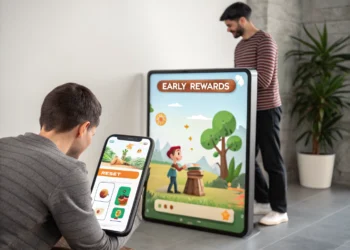

A lot of mobile gaming advice begins with strategy, but casual players usually need something simpler first: a way to protect the feeling of play. That is especially true when you are playing for half an hour and noticing you spent more time collecting rewards than making choices.
A time-respecting mobile game gives players clear progress without demanding constant attention.
The first clue
A respectful game makes the next step understandable. It may have depth, but it does not hide progress behind confusion. It lets players see what they are working toward.
There is no perfect routine for every player. A student, a commuter, a parent, and a night reader will all use mobile games differently. The point is to make the game serve the moment you have, not the imaginary schedule the app seems to expect.
What smart players do differently
Games that do not respect time often bury simple actions under multiple menus, force unnecessary waiting, or make every missed login feel like a punishment.
The useful question is not whether the game is good in general. It is whether the game is good for the kind of session you are actually having. A beautiful story game can be wrong for a three-minute break. A simple puzzle can be perfect on a tired evening. Context matters.
Questions worth asking
Try looking at the next session as an experiment rather than a commitment. Change one behavior and see what happens. Maybe you ignore the event tab. Maybe you stop after one chapter. Maybe you play with the sound lower, or you decide not to check the shop until the weekend.
- Decide what you want from the session before opening the app.
- Ignore at least one optional red dot without guilt.
- Stop after completing one clear goal.
- Check whether the game still feels enjoyable tomorrow.
One useful test is to check how you feel after the session ends. If you close the app feeling lighter, curious, or satisfied, the game is probably fitting your day. If you close it feeling behind, irritated, or strangely obligated, the routine may need a change. That reaction is more honest than the reward screen.
Common traps
Casual players also get stuck when they copy the habits of heavy players. Someone who plays for two hours a day may enjoy perfect optimization. Someone who plays before bed probably needs a lighter routine. Neither style is wrong, but mixing them can make the game feel uncomfortable.
This is where GameStory Guide keeps its advice practical. For a Joyread-style audience, a good mobile game often works best when it feels like a companion to reading, not a replacement for everything else. The game should have enough story, character, rhythm, or puzzle satisfaction to invite attention without taking over the evening.
Make the decision yours
A real guide for casual players should leave room for taste. Some people love events, some love slow progress, and some only want a short story chapter before bed. Playing smarter means noticing which kind of player you are this week, not forcing yourself into someone else’s version of progress.
The smartest players are not the ones who clear every task. They are the ones who know which parts of a game are worth their attention. Once you learn that, mobile gaming becomes lighter, calmer, and much easier to keep as a pleasant part of the day.
If you are not sure whether the habit is working, give it three sessions. On the first session, play normally and notice where the pressure appears. On the second, remove one source of pressure. On the third, decide whether the game feels easier to enter and easier to leave. That small test tells you more than a store rating or a loud trailer.
The goal is not to turn gaming into another productivity system. The goal is to make the leisure feel clean again. A smart habit should leave space for novels, messages, sleep, work, and ordinary quiet. When a game fits that space, it becomes the kind of app people recommend honestly because it belongs in a real day.
It also helps to separate the game you admire from the game you actually play. Some games look impressive in screenshots but feel heavy in daily life. Others look plain and become comforting because they ask for so little. Casual players should trust that difference. The better choice is the app that fits your real routine, not the one that seems most impressive in an app store description.
One more useful habit is to review the game once a week instead of judging every session. A single bad level or annoying offer does not always mean a game is wrong for you. But if the same pressure appears every day, the pattern is worth taking seriously. Weekly reflection keeps the decision calm instead of emotional.
For players who enjoy story apps, this approach can make mobile gaming feel closer to reading a good series. You return because the pace suits you, the world feels familiar, and the next step is clear. You do not need to chase every reward to stay connected. You only need enough continuity to remember why you cared in the first place.