
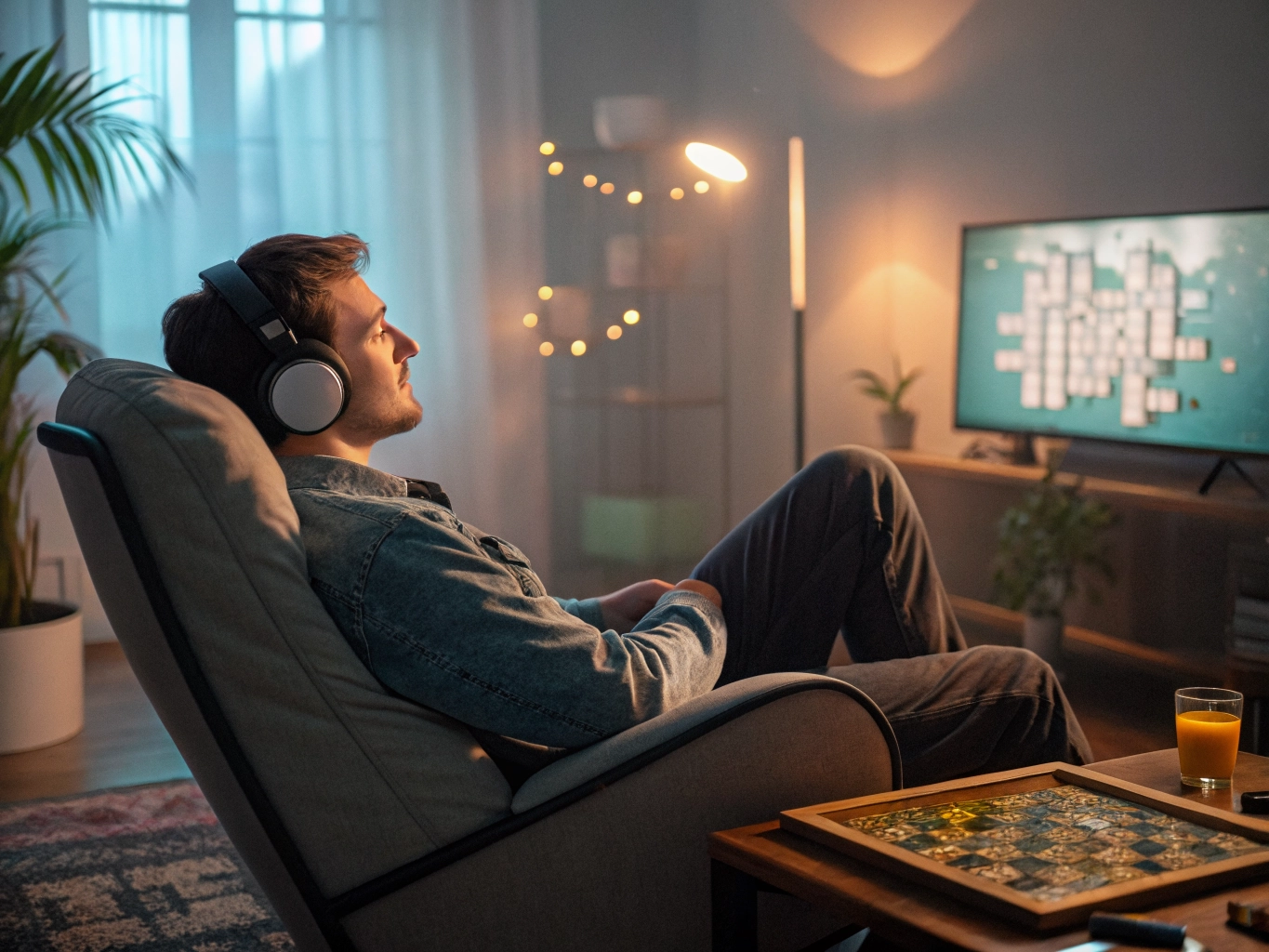

Puzzle and story games look gentle from the outside, but they can still become frustrating. A puzzle may block progress for twenty minutes. A story choice may feel unclear. A timed level may ask for more precision than you expected. A character route may require resources you do not have. When a game that was supposed to relax you starts creating tension, it is worth changing how you approach it instead of forcing yourself through irritation.
With puzzle games, step away sooner than you think. Many players keep staring at the same board because leaving feels like giving up. In reality, a short break often makes the solution easier to see. Your brain stops repeating the same wrong move and returns with fresh attention. If the game has no penalty for pausing, use that. A puzzle solved after a break can feel much better than one solved through mounting annoyance.
Use hints as tools, not failures. Some players refuse hints because they want a pure win. That can be satisfying, but mobile games often design hints as part of the experience. If a hint keeps the session enjoyable and teaches you a pattern, it has done its job. The only time hints become a problem is when the game pushes you to watch ads or spend currency so often that the puzzle feels unfair. Notice the difference between helpful support and pressure.
Story games create a different kind of frustration. Choices may be vague, emotional, or tied to outcomes you cannot predict. If you worry about making the perfect choice, the story can stop feeling like play. Try choosing based on the character you want to be in that moment rather than hunting for the best reward. A story game is often more memorable when your choices feel personal, even if they are not perfectly optimized.
Check whether the game has replay options. Some story games let you replay chapters, reset routes, or revisit choices. Knowing this can reduce pressure. If choices are permanent, slow down and read carefully before tapping. Avoid making important choices when you are tired or distracted. It is surprisingly easy to misread tone or skip a line when playing late at night, then blame the game for feeling confusing.
Difficulty settings and accessibility options are worth exploring. Some puzzle games offer relaxed mode, fewer timers, color assistance, larger text, or reduced animation. Story games may offer auto-play speed, text speed, or backlog history. These settings do not make you less of a player. They make the game fit your comfort better. Mobile games are played in real-life conditions, not perfect quiet rooms, so adjustment is normal.
If frustration keeps returning, ask whether the game matches what you wanted. A challenging puzzle can be rewarding if you enjoy challenge. A dramatic story can be satisfying if you enjoy emotional tension. But if you came for calm and the game keeps making you feel stuck, there are better fits. The point is not to finish every mobile game you start. The point is to spend your free time in games that leave you curious, relaxed, or pleasantly challenged rather than repeatedly annoyed.
Frustration is also affected by when you play. A difficult puzzle during a relaxed afternoon can feel satisfying. The same puzzle late at night may feel unfair. If you notice yourself getting impatient quickly, stop and return later. The game did not change, but your energy did. Matching challenge to mood is part of playing well.
Keep a backup game for low-patience moments. This can be a simple word game, cozy decoration game, or story app where progress does not depend on skill. Switching to a calmer game is better than forcing yourself through a level while your mood gets worse. Casual players do not need to prove loyalty to one app.
When a game repeatedly frustrates you in the same way, treat that as design feedback. Maybe hints are too expensive, choices are too unclear, or difficulty spikes too sharply. You are allowed to prefer games with smoother pacing. Enjoyment is a valid standard, not a weakness.
Frustration can also come from trying to play the wrong game for the wrong mood. A puzzle that feels clever on Saturday may feel impossible after work. A dramatic story that feels moving at night may feel slow during a commute. Instead of labeling a game as good or bad too quickly, notice when it works best. Timing can change the whole experience.
When frustration fades after a break, remember that for next time. You are not only learning the game; you are learning your own patience pattern. Some players solve puzzles better in the morning. Others enjoy story choices more at night. Playing at the right time can be as useful as any hint.
Most players do not need a perfect setup. They need a setup that removes the one or two problems they notice every time they play. Fix those first, then let the game prove whether it belongs in your regular rotation.