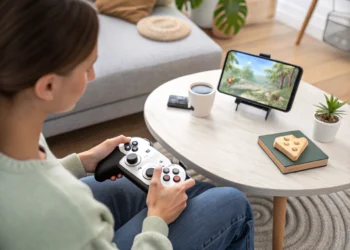

Ten minutes does not sound like much time, but it is often the exact amount of time people actually have. Ten minutes before a meeting. Ten minutes while waiting for food. Ten minutes after finishing a chapter of a book and before going to sleep. Mobile games fit into these gaps better than almost any other kind of entertainment, but only if you choose the right type.
The wrong game can make ten minutes feel frustrating. You open it, collect five login bonuses, close three pop-ups, wait for a match, and then realize you have not really played. The right game lets you do one meaningful thing almost immediately. That is the key difference.
One-round puzzle games
Puzzle games are some of the best choices for short sessions because they naturally come in small pieces. A single board, word challenge, tile match, logic puzzle, or sorting level can fit neatly into a break. You get a beginning, middle, and end without needing to remember a complicated plot or strategy.
The best short-session puzzle games do not make you wait for energy every two rounds. They also avoid turning every level into a booster sale. A little challenge is good; constant interruption is not. Look for games where the puzzle itself is the main attraction, not just a gate between advertisements.
Story chapters with short scenes
Story-based games can also work well in ten minutes if the chapters are broken into short scenes. This is especially good for players who enjoy reading apps, interactive fiction, or character-driven entertainment. A quick scene, one or two choices, and a cliffhanger can feel more satisfying than scrolling randomly through social media.
The important detail is pacing. Some story games ask you to manage outfits, stats, tickets, diamonds, and relationship points before you can enjoy the story. Others let you move through scenes smoothly. For a ten-minute routine, choose the second kind. You want the story to start quickly, not after a tour of every system in the game.
Merge games with small goals
Merge games can be dangerous for time because “just one more merge” easily becomes half an hour. Still, they are excellent for short play when the board is clean and the goals are visible. If you can open the game, complete one order, clear a few spaces, and leave, it fits the ten-minute style well.
Avoid merge games that feel messy immediately. Too many locked items, timers, event boards, and confusing objects can turn a short session into management work. A good casual merge game should make you feel like you tidied something, not like you inherited a storage room.
Idle and collection games
Idle games are built for people who leave and return. They can be good ten-minute games because progress happens even when you are away. You come back, collect resources, upgrade something, and leave. That rhythm can be satisfying if the game stays readable.
The risk is that some idle games become number machines with little personality. If you enjoy watching numbers rise, that may be enough. If you want more warmth, look for idle games with characters, decorating, exploration, or a light story layer. A little context makes the progress feel less mechanical.
Quick decision checklist
- Can I start real gameplay within one minute?
- Can I finish something before closing the app?
- Will I lose progress if I stop suddenly?
- Does the game require sound or full concentration?
- Do pop-ups take more time than the actual game?
A ten-minute game should not ask for the focus of a console session. It should be easy to pause, easy to understand, and satisfying in a small way. Games that respect short attention windows often become the ones people keep longest, because they fit real life instead of fighting it.
The best pick is not always the most famous game. It is the game that matches your spare moments. If your day comes in small pieces, choose games that are built in small pieces too: one puzzle, one scene, one upgrade, one tiny victory before you go back to everything else.
How to build a short-session folder
If you often play in ten-minute windows, it can help to create a small phone folder just for short-session games. Keep only three or four apps there: one puzzle, one story or adventure, one cozy game, and one offline option. This prevents the common problem of spending the whole break deciding what to open. The folder itself becomes a tiny menu for your mood.
Rotate the folder every few weeks. If a game stops fitting, move it out. Short-session games should feel fresh enough that opening them is easy, but familiar enough that you do not need a tutorial every time. When the collection is small, each game has a clear purpose, and your spare minutes feel less scattered.