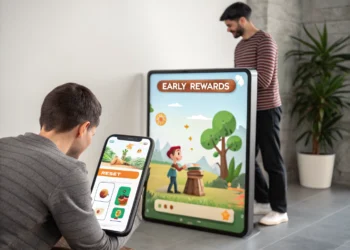

Daily tasks can be useful. They give a game structure, remind you what to do, and offer small rewards for returning. But when a casual game becomes all daily tasks, the fun can disappear. Instead of playing because you want to, you open the app because a checklist is waiting. That is not relaxation. That is unpaid admin.
For casual players, it is worth looking for mobile games that feel good without demanding daily grinding. These games may still have rewards, events, and progression, but they do not make your whole experience depend on perfect attendance. You can miss a day and come back without feeling like you failed.
What grinding looks like on mobile
Grinding is repeated play done mostly for resources rather than enjoyment. It might mean replaying easy levels for coins, clearing the same daily missions, watching ads for energy, or logging in at specific times to collect items. Some players enjoy this rhythm. It can be satisfying when the loop is short and the rewards feel meaningful.
The problem begins when grinding becomes the main activity. If the game’s story, decorating, battles, or puzzles are locked behind too much repetition, casual players may burn out quickly. The game starts to feel like it respects loyalty more than fun.
Game types with lighter routines
Premium games, or games with a one-time purchase, often avoid heavy daily systems, though not everyone wants to pay upfront. Offline puzzle games can also be good because they are usually built around levels rather than live events. Narrative games with chapter-based progress may fit players who want story over constant resource collection.
Some free casual games handle routine well too. Look for games where daily rewards are bonuses, not requirements. A decorating game that lets you play a few levels and make progress at your own pace is different from one that demands multiple logins to stay useful. A merge game with gentle energy pacing is different from one that blocks every action after two minutes.
Questions to ask before committing
- Do I enjoy the repeated action, or only the reward after it?
- Can I progress if I play three times a week instead of daily?
- Are events optional, or do they feel like the whole game?
- Does the game make me anxious about missing limited items?
- Would I still play if the daily reward disappeared?
That last question is powerful. If the answer is no, the game may be using habit more than enjoyment. Many players keep logging in because streaks and rewards are designed to feel urgent. There is nothing wrong with enjoying rewards, but they should support the game, not replace it.
Why low-grind games last longer
Games that do not require heavy grinding often become more sustainable. You do not need to quit dramatically because you never feel trapped in the first place. You can play more on a quiet weekend and less during a busy week. The game adapts to your life instead of making your life adapt to it.
This is especially important for players who use mobile games as a break from work, reading, studying, or family routines. A break should not turn into another obligation. The best casual picks let progress happen slowly and naturally. They give you something to enjoy today without punishing you for not planning your whole schedule around them.
How to reduce grinding in games you already like
If you already enjoy a game but feel tired by the daily loop, try changing how you play. Ignore one event. Stop chasing perfect rewards. Turn off notifications. Choose one goal per session instead of clearing every task. Many games become more enjoyable when you stop treating them like a job.
A good mobile game should survive a more relaxed approach. If it only feels playable when you obey every timer, it may not be the right game for you. Choose games that make returning feel pleasant, not required. The best picks are the ones you can leave alone for a day and still greet warmly when you come back.
Give yourself permission to play less
The easiest way to enjoy low-grind games is to stop treating every available task as a command. Many mobile games show red dots, timers, and reward boxes because they want attention. You can decide that not all of them matter. Pick the parts of the game that actually feel fun and let the rest sit untouched.
This approach changes how you judge new games too. Instead of asking, “Can I complete everything?” ask, “Is there enough here for the way I like to play?” A game that supports relaxed, partial participation is often a better long-term pick than one that only feels good when you chase one hundred percent completion.